
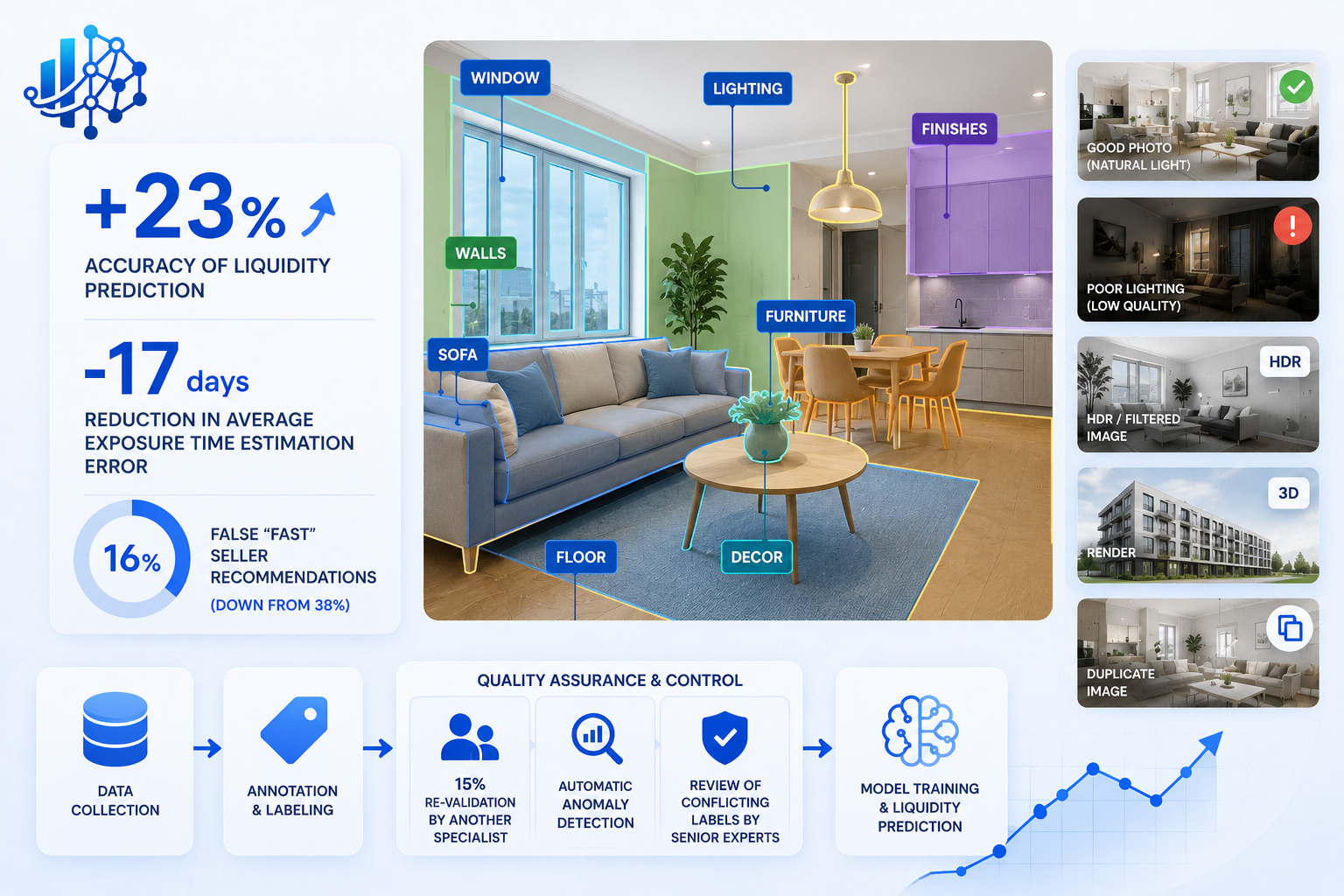
A large proptech platform faced a common problem: its AI model often made mistakes when predicting how quickly an apartment could be sold. The model used price, location, size and other structured data, but it did not fully understand what buyers actually see in property photos.
For example, the algorithm could overestimate an apartment because of good lighting, a large chandelier or professional wide-angle photography. At the same time, important visual factors were not recognized correctly.
Project Goal

The client needed a high-quality image dataset that would help the AI model evaluate the real visual condition of apartments. USDATA prepared this dataset through structured image annotation for real estate photos.
How We Organized the Annotation Process
We analyzed tens of thousands of listings and identified visual factors that could affect property liquidity:
- natural lighting;
- renovation quality;
- visual cleanliness;
- sense of free space;
- condition of the kitchen and bathroom;
- outdated furniture and visual noise.
The annotation process had two levels. The first level covered objects in the image: windows, furniture, appliances and finishing materials. The second level described the overall scene: lighting, room condition, cleanliness and perceived space.

To keep the annotation consistent, we created detailed guidelines for annotators and added a multi-level quality assurance process.
What We Improved
After the first training iteration, we found that the model was still reacting too strongly to photo quality. Professional images could make a property look better than it really was, while poor lighting could make a good apartment seem less attractive.
To solve this, we added extra labels for renders, HDR images, duplicates, distorted photos and other visual features. This helped the model separate the real condition of the apartment from the style or quality of the photo.
Results
After training on the improved dataset, the model showed better performance:
- prediction accuracy increased by 23%;
- the average error in estimating time on market decreased from 45 to 28 days;
- false recommendations for “fast-selling” properties dropped from 38% to 16%.
For the client, this meant more accurate listing ranking, better advertising budget allocation and less time spent on low-liquidity properties.
Key Takeaway
In AI projects, data quality is often more important than changing the model architecture. If the dataset is poorly prepared, the model learns from random or misleading signals and produces inaccurate results.
USDATA helps companies prepare datasets for computer vision, NLP and machine learning projects. We provide image annotation, video annotation, audio annotation and text annotation for AI teams and businesses.