
Introduction
In recent years, the artificial intelligence and machine learning market has undergone significant changes. A large number of open datasets, pretrained models, and tools have emerged, enabling faster development of solutions. Platforms with ready-to-use models and libraries create the impression that the data preparation stage is gradually losing its importance.
However, practical experience in implementing machine learning projects shows the opposite. Despite the availability of models and data, a significant number of projects face issues related to quality, accuracy, and the ability to transfer solutions into real-world environments. In most cases, the root cause of these problems lies not in the model architecture, but in the data itself — its quality, relevance, and correctness of annotation.
Data annotation remains one of the key stages in the development of artificial intelligence systems and directly impacts the final outcome.
What is Data Annotation
Data annotation is the process of structuring and enriching raw data to make it suitable for training machine learning models. Essentially, it is the stage where unstructured input is transformed into a format that algorithms can learn from.
For humans, interpreting data is intuitive: an image is perceived as a set of objects, text as meaningful structure, and audio as speech or events. For machine learning models, however, the same data is simply a set of numerical arrays without semantic meaning. Annotation acts as a bridge between human understanding and machine processing.
Main Types of Annotation
Data annotation is applied across various data types and tasks:
- Text Data
- Named Entity Recognition (NER) — identifying entities such as names, dates, and organizations
- Text classification — determining categories or sentiment
- Semantic annotation — analyzing meaning and structure
- Images
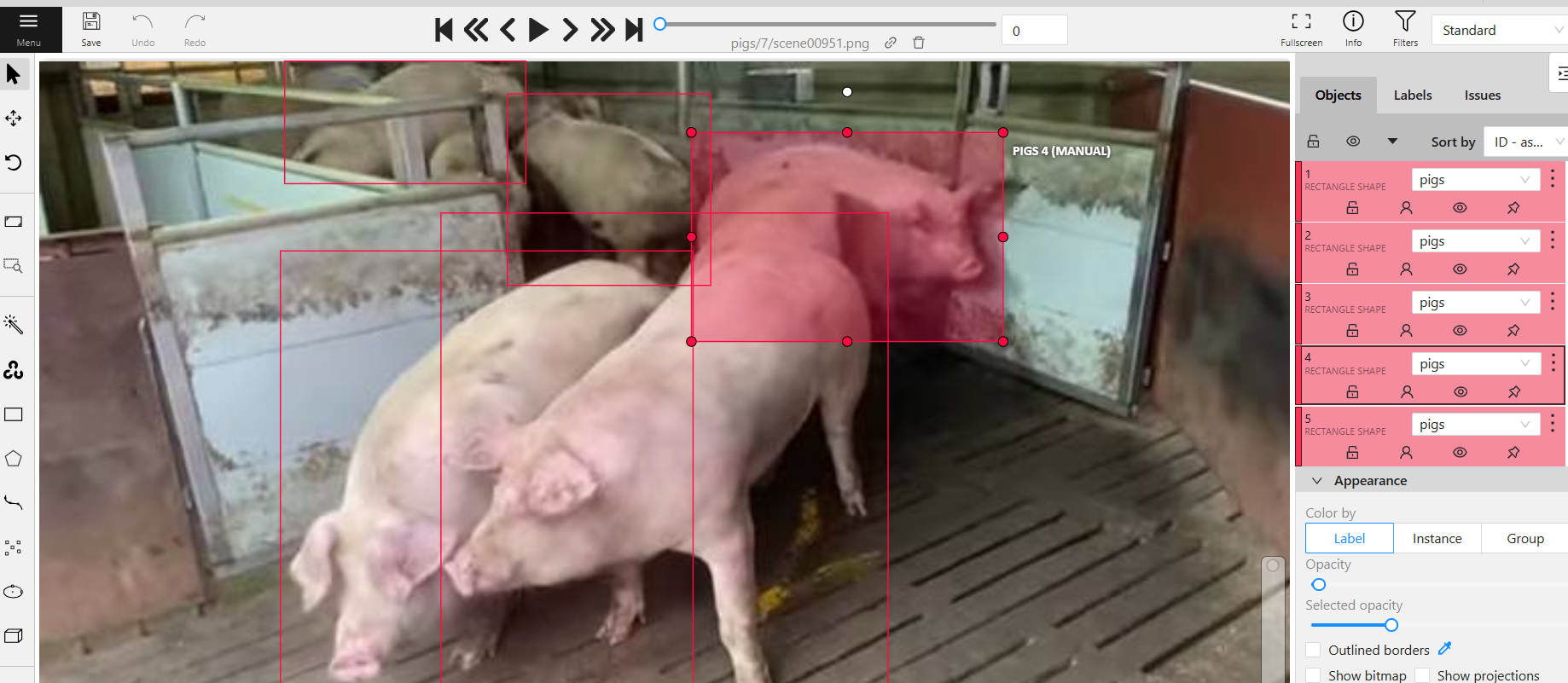
- Bounding boxes — marking objects with rectangles
- Segmentation — precise object boundary detection
- Classification — assigning images to categories
- Video
- Object tracking across frames
- Scene annotation
- Event detection
- Audio
- Speech transcription
- Speaker diarization
- Sound classification
- Specialized Data
- LIDAR — point clouds
- DICOM — medical imaging
- Geospatial and satellite data
Despite differences in formats, the core idea remains the same: transforming real-world data into structured information.
The Role of Annotation in the ML Pipeline
In a typical machine learning pipeline, several key stages are identified: data collection, preprocessing, annotation, model training, validation, and deployment. While much attention is often given to model architecture or optimization techniques, the data preparation and annotation stage largely determines the system’s overall performance.
Data annotation occupies a central position in the ML pipeline, as it forms the foundation upon which the model learns to interpret reality. If we consider the model as a function approximating the relationship between inputs and outputs, annotation provides the “ground truth” for this learning process. Any errors or inconsistencies introduced at this stage inevitably propagate into the model’s behavior.
Unlike software code, where bugs can be systematically identified and fixed, data-related issues are often latent. Poor annotation quality may not be immediately visible during testing but can lead to significant performance degradation in real-world scenarios.
Furthermore, annotation affects not only accuracy but also robustness and generalization. Inconsistencies in labeling rules introduce noise, reducing the predictive power of the model.
Why Ready-Made Datasets Are Not Enough
Despite the wide availability of open datasets and pretrained models, their application in real-world business scenarios is often limited. The main reason is that such datasets are designed to be generic, while practical tasks require adaptation to specific contexts.
A key factor is domain shift — the difference between training data and real-world data. Even minor variations can significantly impact model performance.
Another challenge is the mismatch between dataset structure and business requirements. Real-world applications often require more detailed classification and context-aware labeling that generic datasets cannot provide.
Case Studies Demonstrating Limitations
Case 1: Waste Classification
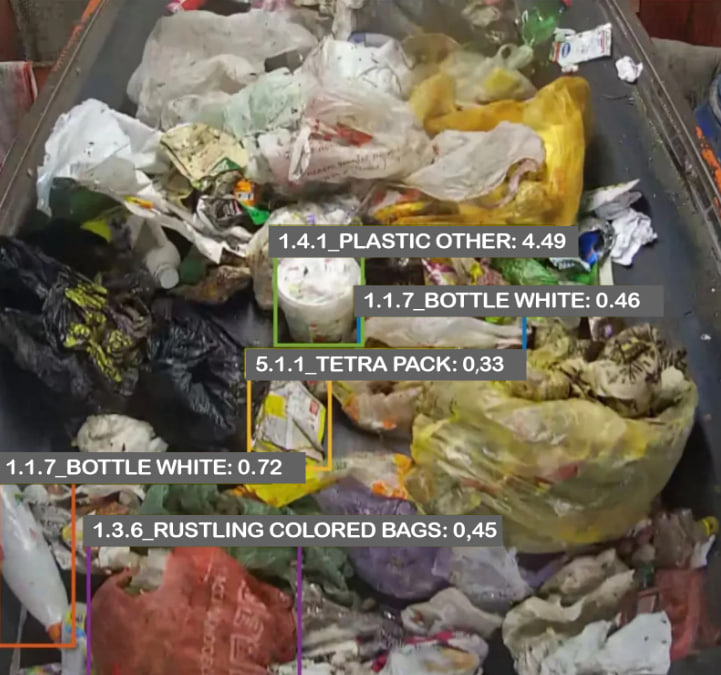
At first glance, waste classification appears to be a simple task: identifying materials such as plastic, glass, or paper. However, in practice, it is far more complex.
The first challenge is class granularity. Real-world applications require distinguishing between many types of materials, such as different plastics or paper categories. This increases the number of classes significantly and complicates both annotation and model training.
The second challenge is geographic variability. Waste composition differs across regions, making models trained in one location ineffective in another.
The third challenge is variability in object appearance. Waste items are often damaged, dirty, or partially occluded, which complicates detection and classification.
Conclusion: waste classification is often underestimated. It requires specialized datasets, detailed annotation rules, and continuous updates.
Case 2: License Plate Recognition Across Regions

License plate recognition is considered a mature computer vision task. However, transferring models between regions introduces challenges due to differences in formats, languages, and visual structures.
Differences include alphabets, layout, font styles, and additional graphical elements. Models trained on one dataset cannot generalize effectively to another region.
Conclusion: even well-established tasks require retraining with region-specific data.
Case 3: Pizza Quality Control
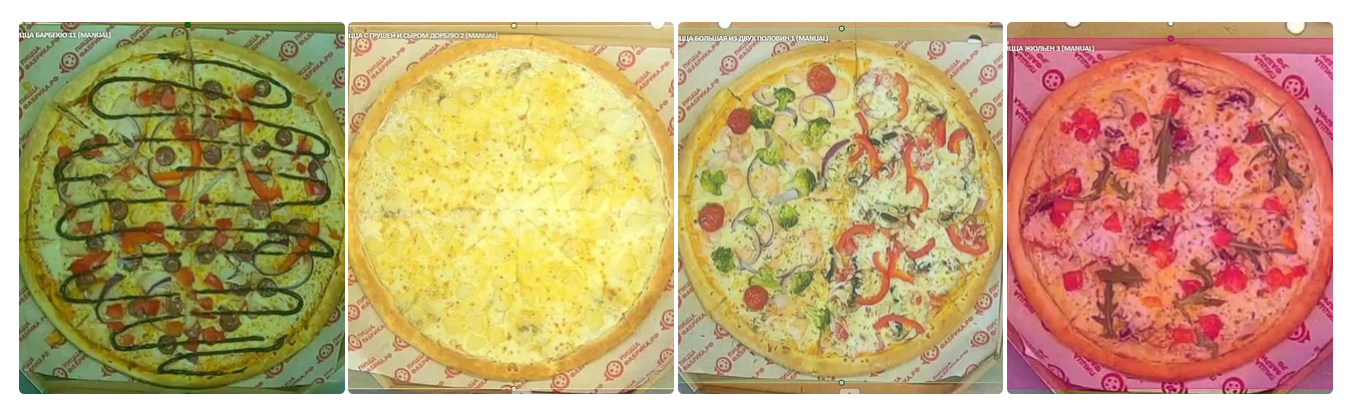
Quality control tasks in food production, such as pizza evaluation, are significantly more complex than they appear.
The system must consider ingredients, distribution, baking quality, color, shape, and cutting accuracy. Large menus with many pizza types add further complexity.
Annotation becomes multi-layered and requires domain expertise. The process also needs continuous updates due to changing recipes.
Conclusion: such tasks require deep adaptation and cannot rely on generic models.
Annotation Approaches
In-house
Provides full control but involves high costs and management complexity.
Outsourcing
Offers flexibility and established processes but requires strong communication.
Crowdsourcing
Effective for simple tasks but struggles with complex annotation requirements.
Synthetic Data
Synthetic data allows generating large volumes of data with controlled conditions. However, domain gaps limit its real-world applicability.
Annotation Process Organization
An effective annotation process includes task definition, guideline creation, training, pilot runs, quality control, and scaling.
Conclusion
Despite technological advances, data annotation remains a critical factor in machine learning projects. Data quality directly impacts model performance, and errors at the annotation stage are difficult to fix later.
Competitive advantage today is driven not only by algorithms but also by the quality of data.