
1. Why data annotation is not just “having people draw boxes”
In modern machine learning and computer vision projects, data quality has become a decisive factor in model performance. Despite advances in architectures and the emergence of pre-trained solutions, it is the data — or more precisely, its correct interpretation through annotation — that forms the foundation for training algorithms.
Data annotation is the process of transforming raw data (images, videos, text) into a structured format suitable for model training. In computer vision tasks, this typically includes:
- object localization (bounding boxes)
- segmentation
- keypoint detection
- classification
From a theoretical perspective, annotation serves as the training signal (ground truth) on which the model builds its internal representations. Errors or inconsistencies in this signal directly impact the model’s ability to generalize and its prediction accuracy.
Annotation as a production process
In practice, data annotation is often perceived as a simple operational task. A common scenario is to assign a team of annotators and ask them to “label the dataset.” However, this approach ignores the systemic nature of the process.
It is more accurate to view annotation as a production cycle that includes several interconnected stages:
- task formalization and definition of data requirements
- development of annotation guidelines
- tool setup and configuration
- team training and coordination
- quality control
- data preparation for integration into the ML pipeline
Each of these stages affects the final dataset quality. Lack of standardization or weak control at any stage leads to the accumulation of errors that become apparent during model training.
Annotation inconsistency problem
One of the key theoretical challenges is annotation consistency. Even with a formally defined task, different annotators may interpret it differently.
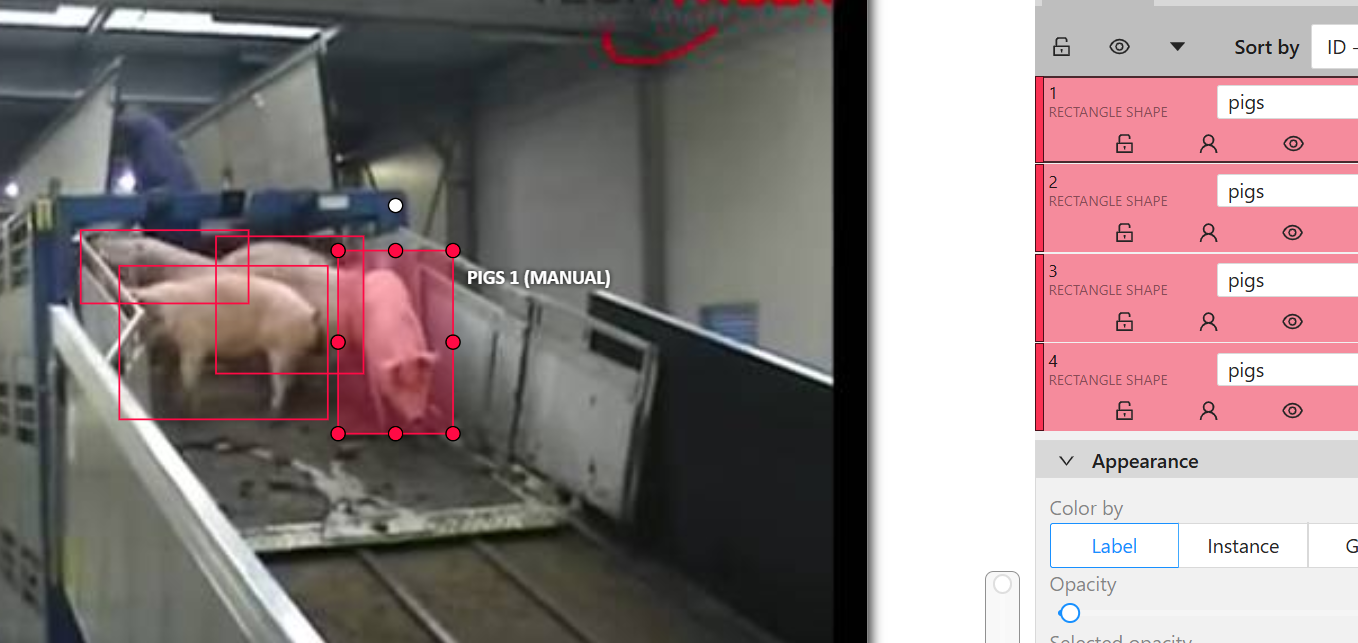
Consider a typical example of detecting people in images. Without clearly defined rules, annotators may:
- include different parts of the body in bounding boxes
- handle partially occluded objects differently
- ignore small or blurry objects
As a result, the dataset becomes inconsistent, with the same class represented by structurally different annotations. For the model, this means an unstable training signal, leading to reduced prediction accuracy.
Tool role: capabilities and limitations
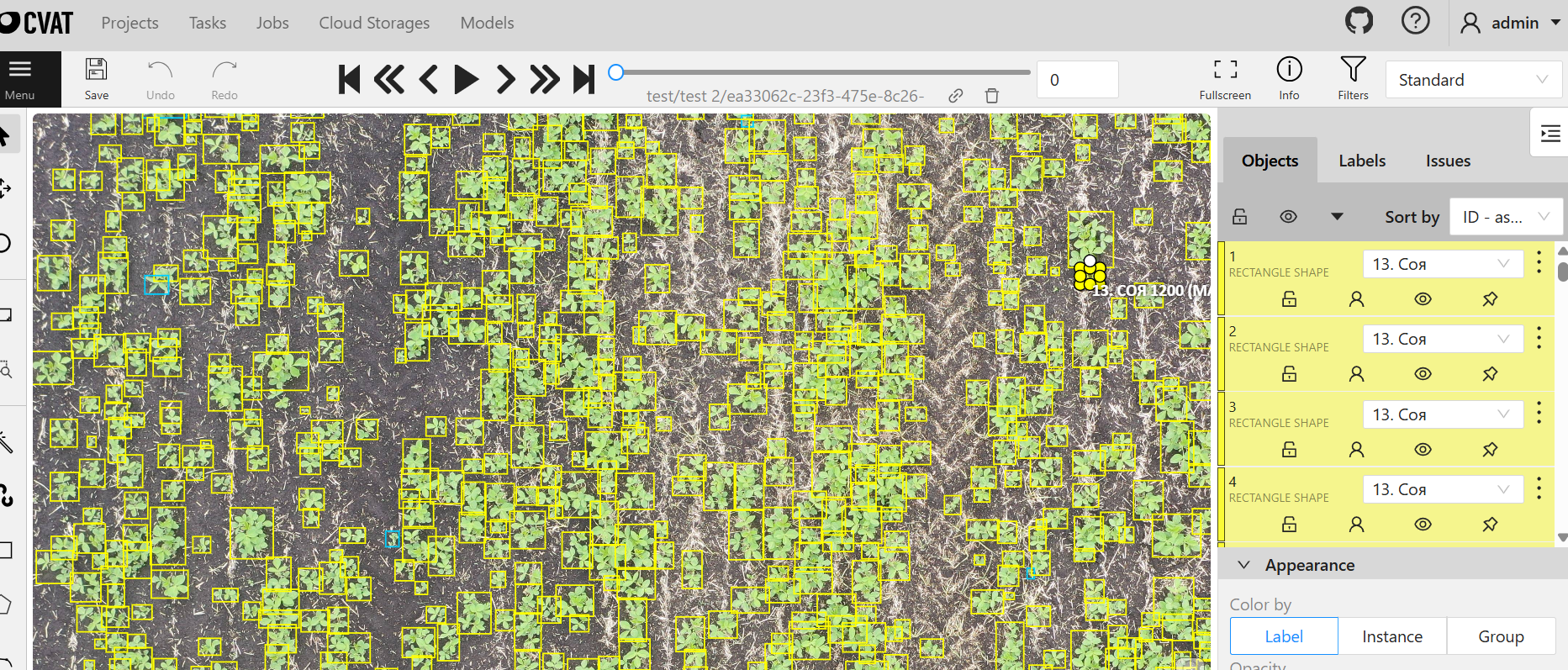
CVAT is one of the most widely used tools for data annotation in computer vision tasks. It provides an interface for image and video annotation, supports various annotation types, offers role-based access, and includes basic quality control mechanisms.
However, it is important to understand that the tool itself does not solve organizational challenges. CVAT does not define annotation rules, does not ensure consistency, and does not guarantee data quality without proper methodology and control.
Practical complexity
At first glance, the annotation process may seem linear. However, behind it lies a range of management decisions — from task structuring to quality control and scaling.
CONCLUSION: data annotation is a critical component of ML systems that requires a systematic approach and managed infrastructure.
2. Annotation process architecture: how it works in practice
Data annotation is not a linear sequence of actions but a managed production cycle. Its key feature is iteration: data returns to previous stages, guidelines are refined, and errors are corrected.
Data preparation
Raw data contains noise: duplicates, corrupted files, and irrelevant content. Without preprocessing, this leads to lower quality and increased workload for the team.
Task formalization
Guidelines define how data should be interpreted. Without them, inconsistencies arise that cannot be fixed without re-annotation.
Annotation as a task flow
Structure Project → Task → Job:
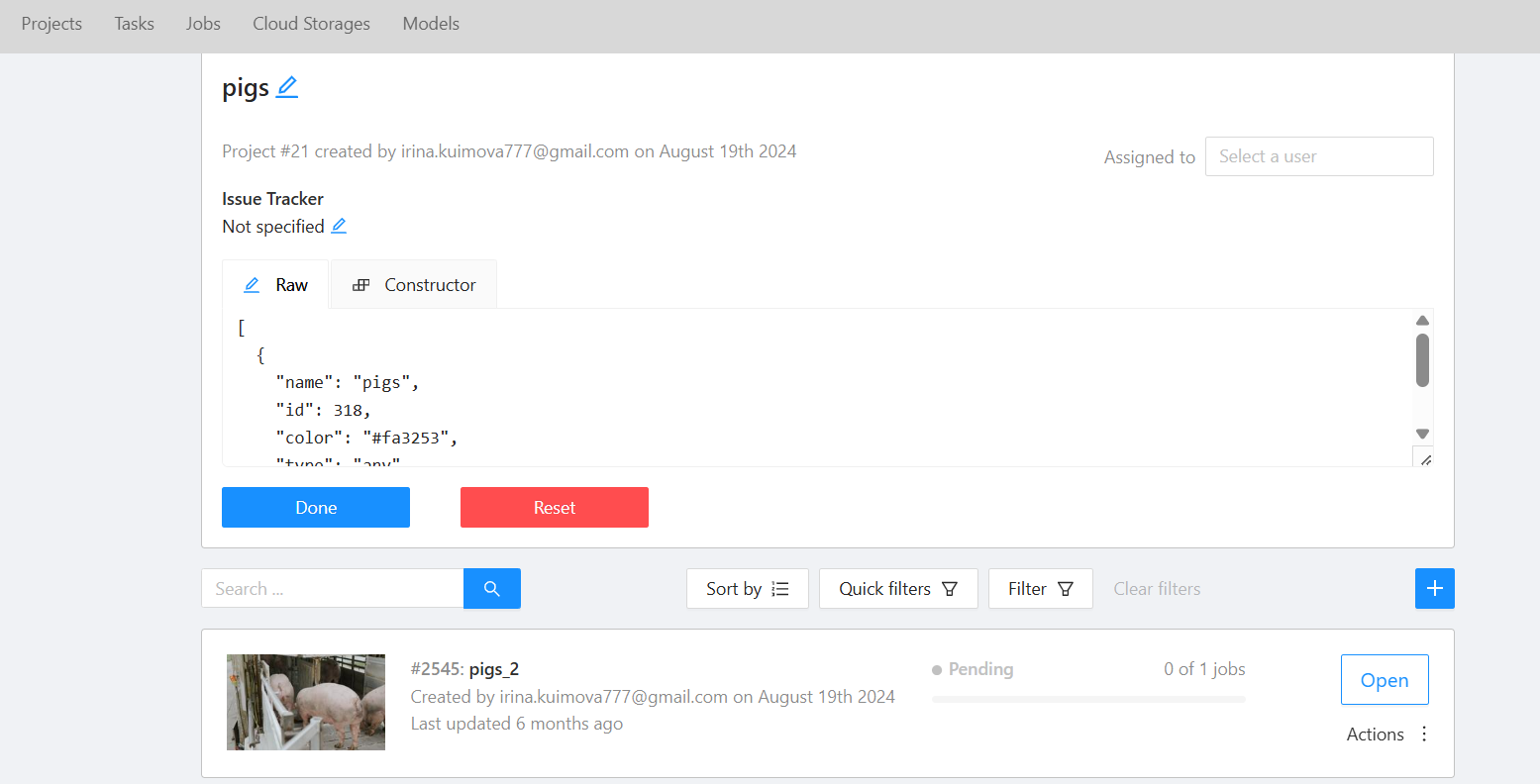
Tasks must be balanced: overly large ones slow down work, while overly small ones increase administrative overhead.
Quality control
Quality control is embedded in the process and performed continuously through review and task feedback loops.
Export and training loop
After training the model, errors in the data become visible and are fed back into the annotation process.
CONCLUSION: annotation is a cyclical system with continuous feedback.
3. Technical infrastructure: server, deployment, and access
Infrastructure determines the stability of the entire annotation system. CVAT is a multi-component application that requires resources and proper configuration.
Server requirements
- 4–8 vCPU
- 16–32 GB RAM
- SSD (NVMe)
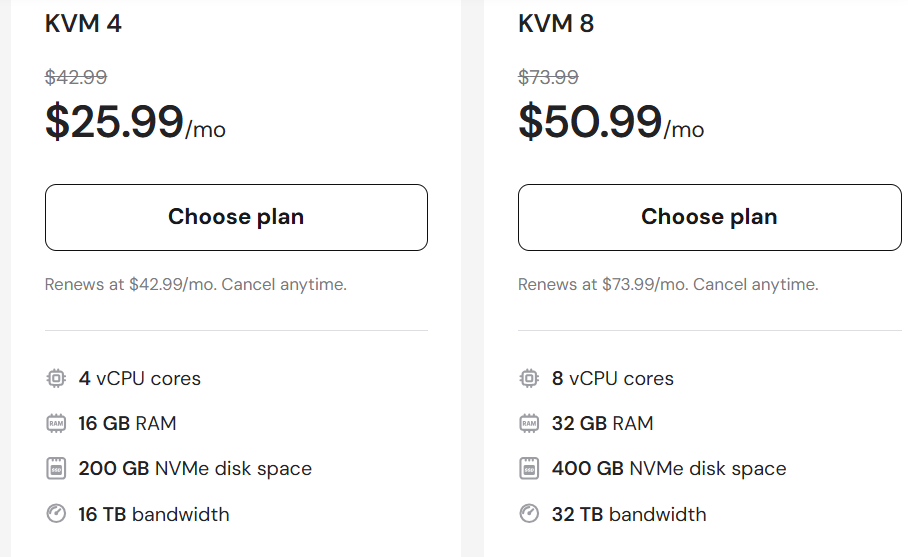
As the team grows, requirements increase, especially in terms of RAM.
Cloud vs on-premise
Cloud solutions enable quick deployment and scalability but increase costs. On-premise infrastructure provides control but requires technical expertise and maintenance.
CVAT deployment
git clone https://github.com/opencv/cvat
cd cvat
docker compose up -d
This launches backend, frontend, PostgreSQL, and Redis. Insufficient resources may lead to container crashes.
Domain and HTTPS setup
server {
    server_name cvat.yourdomain.com;

    location / {
        proxy_pass http://localhost:8080;
    }

    listen 443 ssl;
    ssl_certificate /etc/letsencrypt/live/cvat/fullchain.pem;
    ssl_certificate_key /etc/letsencrypt/live/cvat/privkey.pem;
}
certbot --nginx -d cvat.yourdomain.comUsers and roles
User management in CVAT:
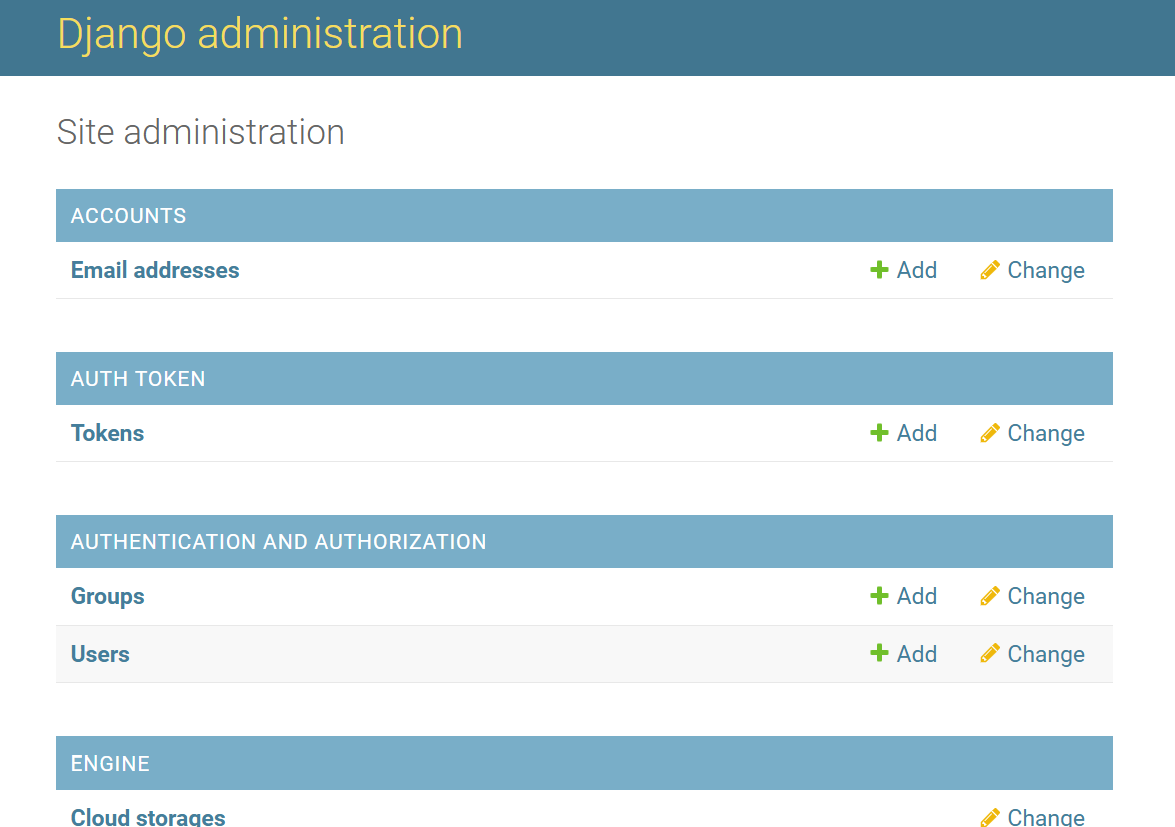
- administrators
- annotators
- reviewers
Common issues
- performance degradation
- disk and network load
- update-related issues
- need for backups
CONCLUSION: infrastructure is a separate responsibility area requiring expertise.
12. Conclusion: annotation as a system, not a tool
Organizing data annotation in CVAT is significantly more complex than it appears at first glance. Behind a simple interface lies a multi-layered system where every mistake scales with the volume of data.
Annotation requires:
- stable infrastructure
- formalized rules
- a trained team
- quality control
- an iterative approach
In practice, scaling in-house annotation often leads to issues with quality, management, and infrastructure.
Thus, the choice between in-house annotation and outsourcing is not only about budget, but about managing complexity.
Data annotation is the foundation of any model, and its quality determines the final result.